A NEW CONCEPT OF ECONOMIC DEVELOPMENT OF THE UNION STATE: A JOINT VISION OF THE FUTURE
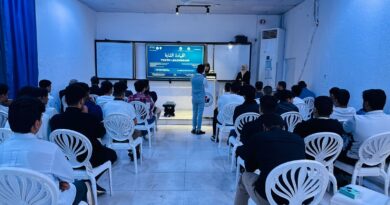
Active expert discussions were held on March 30, 2018, at the Moscow House of Nationalities as part of the section "A New Concept for Economic Development of the Union State: A Shared Vision of the Future" of the 1st Union State Prospective Development Forum.

The issues discussed by leading representatives of economic science from Russia and Belarus, government and public figures, and experts included:
- The future of the Union State's economy: what will it be like, and what joint strategy will guide it?
- Economic development of the Union State in the context of digital transformation of society;
- How can mutual benefit and equal partnership be ensured in the new format of the Union State?
- Russia and Belarus in international integration structures: how to more effectively combine unity of positions and national interests?
- Removing barriers and eliminating misunderstandings;
- Instruments of market self-regulation in the common integration space;
- Convergence of approaches and traditions of doing business;
- Exchange of successful experiences in the field of government regulation and public-private partnerships;
- Projects for a new economic concept and platform for the Union State from Russian and Belarusian experts.

The following speakers presented their reports at the breakout session: Deputy of the State Duma of the Federal Assembly of the Russian Federation, Honorary Citizen of Orenburg Yuri Nikolaevich Misheryakov (“Interaction of Russia and Belarus in the Field of High Technologies — a Powerful Factor in the Economic Development of the Union State”), Doctor of Economics, Professor Viktor Alekseevich Efimov (“Conceptual and Ideological Prerequisites for a New Economic Platform”), Nobel Prize 2007 Nominee in Noospheric Economics, Doctor of Economics, Professor, Academician of the National Academy of Sciences of Belarus, founder and head of the International Innovative and Noospheric Scientific School for Sustainable Development of Belarus Petr Georgievich Nikitenko (“On the Scientific Paradigm of Development of the Union State”), Copresident of the Public Chamber of the Union State from the Republic of Belarus Andrei Mikhailovich Biryukov (“Digital Transformation of the Economy: Challenges and Opportunities for the Union State”), Deputy Director for Research of the Institute of Socio-Economic Problems of Population of the Russian Academy of Sciences, Doctor of Economics, member of the working group "Social Policy and Improving the Quality of Social Services" of the Expert Council under the Government of the Russian Federation Olga Arkadyevna Aleksandrova ("Ensuring Unity in Goal Setting with Respect to the Vectors and Models of Socioeconomic Development of the Union State"), Doctor of Philosophy Igor Viktorovich Solonko ("Technology for Forming a Shared Image of the Future"), Candidate of Economic Sciences, Associate Professor of the St. Petersburg State Agrarian University M.V. Velichko (“Scientific and methodological support for financial and economic sovereignty”), candidate of economic sciences Evgeny Andreevich Skoblikov (“Distinction between settlement and cash and credit and investment transactions as a way to increase the efficiency and reliability of the financial system”), chief architect of the Minskgrado UP, president the Urban Development section of the Belarusian Union of Architects Alexander Grigorievich Akentyev (“On the development of human capital”), President of the Republican Confederation of Entrepreneurship Viktor Egorovich Margelov (“A bright image of the future Union State - theses for the platform”).

Among the problems noted during the discussion was the following: "The current system of socioeconomic relations between Belarus and Russia, both within the Union State and within other integration entities, has enormous potential for development. However, due to a number of objective and subjective reasons, our economic system does not fully meet the demands of today and does not adequately respond to existing external and internal challenges and threats.
Russia and Belarus are countries with accumulated wealth of intellectual potential and inexhaustible natural resources, united by centuries-old common goals and objectives for the development of civilization. The key to the future fruitful development of these countries within the framework of a common Civilization Project is the extensive experience of joint economic development and scientific and technical cooperation, as well as the unity of national spiritual and moral values.
The Union State of our fraternal countries has a distinct advantage over other integration entities and holds enormous potential for future development, with the prospect of other interested countries joining them on similar principles, primarily those with shared spiritual and moral values.
However, there has recently been a decline in the level of economic cooperation between the fraternal countries, as evidenced by the following circumstances:
1. The long-term failure of both parties to fully fulfill their obligations under the Treaty on the Establishment of the Union State of 08.12.1999 and the action program of the Russian Federation and the Republic of Belarus for implementing the provisions of the Treaty on the Establishment of the Union State;
2. Unwillingness to eliminate barriers to the protectionist policies of Russia and Belarus, which create unequal conditions for economic partnership between domestic enterprises and enterprises resident in a partner country in the Union State. Experts estimate at least 70 such barriers (restrictions) on both sides;
3. Failure to recognize the effectiveness of the mutually agreed-upon economic development course for Russia and Belarus, including the creation of new large-scale production facilities taking into account the interests of existing production facilities in the partner country;
4. Lack of trust among partners of Russia and Belarus at various levels of government. In both countries, the media has developed a practice of exaggerating the scale and significance of negative facts and hushing up numerous positive examples of activities within the Union State;
5. The discrepancy between the scale and structure of the mixed economies of Russia and Belarus, which hinders the development and expansion of partnerships between enterprises in both countries.
Experts are very cautious about the preservation and prospects of the existing socio-economic development models in both Russia and Belarus. The period of "transitional economy" that has lasted for more than a quarter of a century will not allow our countries to develop at the global average rate without serious economic transformations. The forecasts are negative. The time has come to learn lessons from our historical past. It is necessary to preserve and develop the best, which has demonstrated real positive results. At the same time, it is important to understand: restoring the past is impossible; we need to build the future.

Failure to take timely and appropriate measures to counter external and internal challenges at the strategic level, while maintaining the existing socio-economic development models, will dramatically increase the likelihood of the following highly dangerous events occurring in our countries:
1. Deindustrialization. Loss of industrial and human resources potential;
2. Decline in scientific potential;
3. Massive mental and moral degradation of citizens;
4. Rapid population decline, declining living standards;
5. Critical decline in external security, which could lead to the dismemberment of our countries, their forcible involvement in the sphere of influence of our geopolitical competitors, with the loss of our own sovereignty;
6. Loss of social stability in society, and loss of control over socio-economic processes in the state.
There are also a number of other serious threats associated with the hybrid war that the West has effectively declared against us. As is well known, to successfully defend ourselves, our countermeasures must be as diverse as our offensive weapons.
To avoid negative consequences, we must build a comprehensive system for protecting our interests within the framework of a unified concept."

In their final materials, the meeting participants noted: "Thegeneral approach to developing a new concept for the long-term socioeconomic development of the Union State is based on the premise that today's world, developing primarily within the framework of the Euro-American conglomerate, has entered a phase of systemic crisis and stands on the threshold of an objectively necessary global transformation. The unipolar system of undivided power of the Western world, which has operated for the past five hundred years, has exhausted its potential, in accordance with the Law of Time. There is no future for the current concept and the model of financial capitalism that flows from it. This is confirmed, among other things, by the conclusions of the Club of Rome's latest anniversary report: 'The Old World is Doomed. The New World is Inevitable.' Based on this, we are obliged to independently shape a new shared vision of the future in the interests of our fraternal peoples. If you don't build your own strategy, someone else will.

Russia and Belarus possess all the attributes of a self-sufficient civilizational core, based on common, characteristic moral principles. Using these foundations, we are capable of developing and offering humanity a new civilizational paradigm, a concept of globalization that is an alternative to the currently dominant one. This paradigm must be based on the spiritual and moral principles inherent to our peoples and will be more attractive to the majority of countries and peoples of the world than the current dominant one. We proceed from the premise that the current financial and economic mechanisms and socioeconomic platform are secondary to the chosen development concept. Ultimately, all our problems, the sources of sustainable economic development, lie in the non-economic sphere, in the realm of morality. Only within the framework of this new concept can and should the profit-oriented liberal market model of economic development give way to a fundamentally new model—a model whose integral ultimate goal is not profit, but people themselves. Reorienting the economy towards strengthening human potential requires a transition to a model of economic development based on a different goal-setting and a different concept for achieving newly established goals.

It is essential to delink our credit and financial systems from their dependence on the euro and the dollar. We should consider introducing a new supranational currency that would be attractive to BRICS, EurAsEC, and CIS member countries. It would not belong to any single country and would not be used as a means of payment in commodity exchange transactions. Such a currency would serve as a means of exchanging one country's currency for another. The transferable ruble of the CMEA member countries, which existed during the Soviet and Warsaw Pact eras, could serve as a prototype for such a currency. It is assumed that all countries in our alliance would sell their goods and services in their national currencies, which would be purchased by the purchasing country through the transferable currency.
Forum participants proposed differentiating, in varying forms, three fundamentally different circuits of monetary circulation. The first circuit is responsible for financial support of the production of goods and services and the country's innovative development. Additional emission into this circuit, supported by resources, increases production volumes and reduces inflation. The second circuit of monetary circulation—the consumption circuit—covers all public needs for the consumption of goods and services by the population. Excess emission entering this circuit increases inflation. The third circuit, independent of the previous circuits, is the circuit of international trade (foreign exchange transactions).

The means for achieving the strategy's objectives is a model of economic development for individuals and societies, in which:
1. Moral and legal restrictions have been introduced on the speculative self-expansion of finances based on a new concept of money and an energy standard for the provision of a non-inflationary ruble.
2. A fair balance of export-import operations has been ensured by ceasing exports for currencies that do not have their own legally established energy security standard.
3. A transition has been implemented from accounting and financial to organizational and technological balance approaches to economic planning in physical indicators focused on socially useful needs. In this case, the plan acts as the goal, and the market is motivated as a means of achieving this goal.
4. Mechanisms of state demarcation and tax-subsidy management of the demographically determined and degrading-parasitic needs of society are in place. They are aimed not at increasing profits, but at ensuring the priority of those spheres and areas that develop the spiritual, moral, and intellectual potential of society.
5. A radical change in the Union State's spatial development strategy has been implemented, shifting from metropolitan to landscape-based urbanization, as a necessary condition for strengthening the genetic potential and moral, psychological, and physical health of the population across generations. This lifestyle significantly increases employment and self-employment, returning women to family care and raising the younger generation.
The primary objective of the economy, within the current prevailing concept, is considered to be the ever-more complete satisfaction of unlimited human needs. The new strategy must recognize such target settings as erroneous. They deliberately foster unreasonable consumerism, as one of the challenges of the modern global world, oriented toward the interests of transnational corporations rather than the individual. All needs must be divided into two fundamentally distinct classes. The first are demographically determined, predictable, and precisely calculated, primary natural needs. These needs contribute to the physical, spiritual, and moral development of individuals and society. The second class are degradative and parasitic needs; their satisfaction inevitably leads to the ultimate degradation of the individual and to a deterioration in the quality of life for individuals and society. Satisfying these first-class human needs must become the fundamental goal of the economy and the concern of a socially oriented Union State. The economic sector working to meet first-class needs must be supported by the state, while the alternative must be suppressed through tax and subsidy mechanisms.

For the effective development of the economy of human and social development, the following approaches and measures are necessary:
- Accelerated formation of a noospheric socio-economic model of the state, ensuring a high standard of living for its citizens, their material, personal, and spiritual development, creating conditions for the implementation of the principles of social justice, for the formation of a harmoniously developed personality, and the unleashing of the creative potential of each person.
- Based on a rethinking of the goals and meaning of human life, to facilitate by example the transition of global civilization to a conceptually new culture, which, based on universal managerial literacy, will ensure:
1) balance and harmony of relationships between all social groups of the Union State and the planet as a whole based on achieving the moral and ethical homogeneity of multinational humanity and each culturally distinctive society,
2) the life of civilization in the continuity of generations in harmony with the Earth's biosphere, the Cosmos, and God, which should become the foundation for a new stage in the history of human development.
This presupposes our assistance in the transition of the global historical process to a qualitatively new stage of development with the creation of a multipolar society of equal opportunity. In this case, the main criteria of progress will not be the growth rates and profits of corporations, but indicators of the intellectual and moral development of individuals and society towards the Homo Sapiens type of mental structure."

The working group approved at the Forum is finalizing the platform and concept for the economic development of the Union State for wider publication.