PARTICIPATION IN THE INTERNATIONAL CONFERENCE "STRENGTHENING PEACE THROUGH COMMUNITIES"
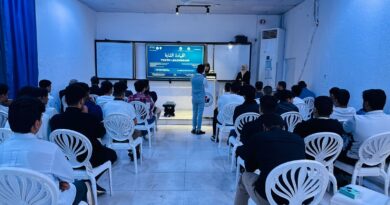
On August 20, 2021, the International Conference "Strengthening Peace through Communities" was held in Pskov. It was organized by the National Association of TOS (Territorial Self-Government) and was actively attended by members of the International Public Chamber.

The event was attended by government and public figures from regions of Russia, Belarus, Poland, Israel, Finland, Lithuania, Estonia, and Germany.

Participants were welcomed by the Governor of the Pskov Region Mikhail Vedernikov, President the All-National Association of TOS, Deputy of the State Duma of the Federal Assembly of the Russian Federation Viktor Kidyaev, the First Deputy Chairman of the OATOS, Deputy of the State Duma of the Federal Assembly of the Russian Federation Alexander Kozlovsky, representatives of the Ministry of Foreign Affairs of the Russian Federation, Rossotrudnichestvo, and the Pskov Regional Assembly of Deputies.
 addressed the Forumpresident of the Chamber, President of the Club of Russian-Belarusian Cooperation Figures, member of the Union of Writers of Russia and the Union of Writers of the Union State, Alexander Olshevskiy.

In his speech, Alexander Olshevskiy noted: "It is symbolic that today's conference is being held in such an important border region as the Pskov Region, renowned for its history and the presence of many revered shrines, and that it is here that issues of strengthening peace among communities are being discussed. Our colleagues from the CIS countries have repeatedly expressed a desire to visit the holy sites of the Pskov Region and personally witness the results of the extensive work to preserve historical memory, carried out under the leadership of the Head of the Region, the esteemed Mikhail Yuryevich Vedernikov."
The choice of the conference topic and the exchange of experiences on this topic are more relevant than ever, as the quarantine restrictions of the past two years have significantly altered the capabilities of traditional public diplomacy formats. And the importance and role of local communities, in absolutely all areas of communication, has unexpectedly increased dramatically. In many ways, they have assumed previously uncharacteristic informational, coordination, and social functions, becoming an organizing force and gaining increased trust in a context of a general lack of such trust.
Against this backdrop, we all see in a new light the need for systematic engagement with local communities, collaboration between the state and public sectors on ideology and development strategy, and increased attention to their development and daily engagement. This is especially true in the face of changes and force majeure circumstances, such as the pandemic and other events that require citizens to reconsider their everyday behavior, and new restrictions that cause a crisis of trust in official sources. Inattention to and disregard for this rapidly developing part of the public sector is becoming unacceptable and fraught with extremely dangerous consequences.
The example of fraternal Belarus is more than illustrative. We recently witnessed the consequences of the abuse of simple neighborhood chat networks and the Telegram channels they inspired, which fell into the wrong hands for unrelated purposes. We saw the consequences of the destructive politicization of local communities, the growth of social tension they can provoke, and the dangerous instrument of domestic destabilization they can become without proper attention. This once again clearly demonstrated that the desire for community and self-organization is an objective phenomenon of the times, only intensifying during difficult times and requiring direction. And if this direction isn't shaped in the interests of the state, it will be imposed by external forces, which are far from always friendly and constructive. And it's clear that with systematic work with neighborhood communities, their high involvement in national processes, and attention to them, they can, on the contrary, become a crucial factor in maintaining stability and mutual understanding.
Today, we're seeing a similar situation with the role of small local communities in shaping attitudes toward vaccination, treatment and prevention methods, and fostering loyalty to government initiatives. Due to the forced reduction in public outreach and the growing number of uncertainties and sources of concern, neighborhood or residential communities, and local news chats, are becoming key sources of expertise and even a guiding force.
And with borders closed and intercountry and interregional travel complicated, local communities have suddenly become a much more significant resource for maintaining international contacts. The interpersonal and family ties they foster support the exchange of information about events abroad and the formation of assessments of these events. The volume of trade and economic ties, interstate trade in goods and services, and labor exchanges linked to such interactions has increased.
Working directly in the field of public diplomacy, my colleagues and I have observed how many of the tools for maintaining ties even with our closest allies have become difficult to access due to pandemic restrictions—from traditional dialogue platforms such as forums and conferences to pilgrimages, mass events commemorating commemorative dates, and cultural events. While some may think this is unimportant, it creates the conditions for the loss of regular contact even with fraternal nations, a loss of "finger on the pulse," and ultimately, sometimes quite disappointing foreign policy surprises and increasing mutual distance.
But at the community and family level, channels of interaction remain, and their diplomatic role is growing. And it's crucial that these channels, which have suddenly become a factor in national security, be used for good, and at a minimum contribute to the preservation of international, interethnic, and interreligious peace and harmony.
Therefore, the International Public Chamber also pays considerable attention to work in this direction.
Firstly, in terms of ideological content, traditionally established forms of community based on religious and national affiliations, such as Orthodox parishes, Muslim communities, and diasporas, are proving more effective than new ones. The potential of a church parish, for example, as an organizing center, while also embodying a value-based component, is colossal. Therefore, public diplomacy based on cooperation between parish communities is one of the major programs currently developing successfully. Another major program is public diplomacy through national diasporas abroad. So far, these are primarily diasporas of Muslim peoples, which are characterized by the greatest national cohesion.
Secondly, our colleagues are actively developing the TOS system in Russia and neighboring countries. This includes successfully implementing a professional training program for local community managers. This means we are working to establish a systematic and professional foundation for the development and management of local communities, with standardized approaches and methods.
Third, with our support, a program for the development of municipal public chambers is being implemented. This program is being implemented by the current Federation of Municipal Public Chambers of Russian Cities. It is based on the developments in forming local public chambers at the district and small town level. One of the goals here is to work with spontaneous forms of public self-organization, uniting them, and maintaining a constructive focus.
We sincerely welcome cooperation in all of the above areas. After all, regardless of any momentary disagreements, everyone present is united by a common cause, undoubtedly good and important to everyone—the maintenance of peace, harmony, and mutual understanding.".
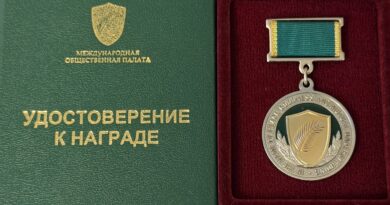
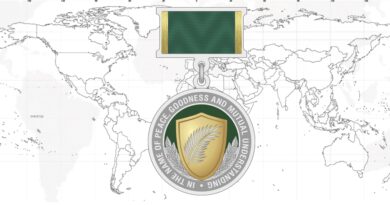
 Along with the participants, he spoke fondly of Professor Elena Shomina, a member of the International Public Chamber's Presidium, a prominent ideologist behind the creation of TOS in Russia, and a pioneer of good-neighborliness development programs. She recently passed away, marking another enormous loss for all of us as a result of the pandemic. Many of today's TOS activists are her students and followers, developing her ideas and developments. A. Olshevskiy also informed the conference participants of the decision of the Chamber's 5th Congress, held on July 19, 2021, to establish a new international award—the Elena Sergeevna Shomina Medal "For Contribution to the Development of Local Communities."

Two members of the International Public Chamber, who have been developing inter-municipal cooperation and local communities for many years, played a significant role in organizing the conference and ensuring its substantive content: president of the Kirov Women's Council Natalia Kataeva , President of the Vyatka Sobornost Foundation for the Support of Local Community Initiatives and ; and Igor Kononenko , Deputy Director of the All-National Association of Territorial Public Self-Government (OATOS) . The conference focused on their projects and the results they have achieved.
The event received high praise from participants and guests and was another important step in strengthening public diplomacy through local communities.